Skip to content

Cart

Your cart is empty

Continue shopping
EXPLORER LES ORIGINES
Voir toutes les origines

Öko Caribe

This cacao replaces the one from Reserva Zorzal.

Lightly roasted

Six hours from harvest to fermentary

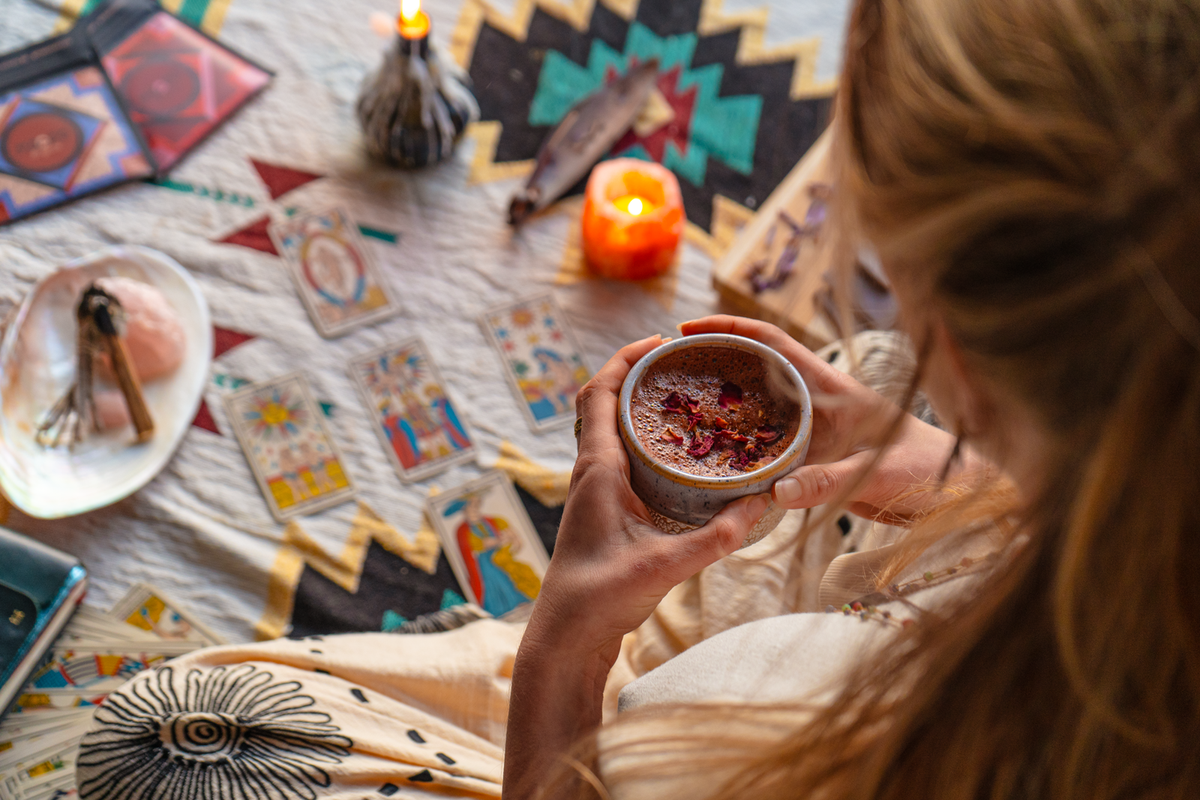
Cérémonie de cacao

Tasting notes

Nutty / Praline · Fruity

Texture

Soft

Cultivar

Trinitario · Nacional · Criollo

Recommended dose

20-30 g per ritual

  • Everyday 10–20 g
  • Creative 20–30 g
  • Ceremonial 30–40 g
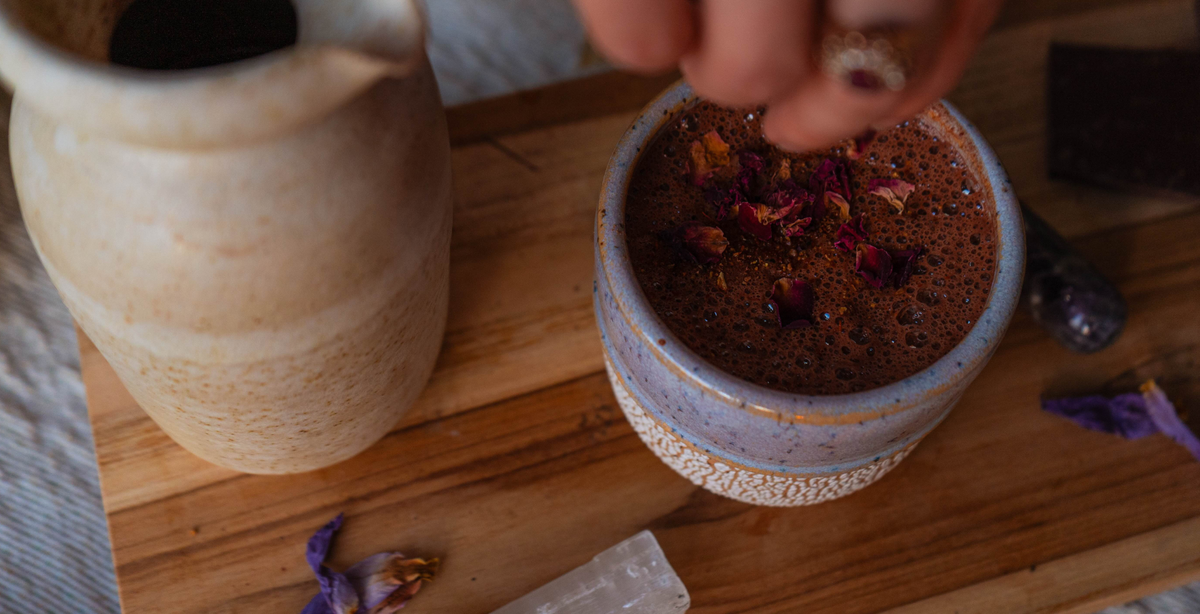
Making a drink
  1. For a pure cacao drink, allow 20–30 g per cup, or 30–40 g for a denser texture. With a chocolate bar, adjust the amount to your taste: it already contains sugar.
  2. Grate or break up the cacao or chocolate.
  3. Heat the water, or a plant-based drink, without bringing it to the boil: 60 to 65 °C at most.
  4. Pour over the pieces, let them melt, then beat with a whisk or a molinillo until you get an even foam.
Sale price€20,00
Size: 250 gr

In stock · Ships within 24 to 72 hours

  • Dispatched Monday and Thursday

Ingrédients & valeurs nutritionnelles

Cocoa mass, cocoa butter. Cocoa: 100%.

Valeurs moyennes pour 100 g
Énergie 2479 kJ / 600 kcal
Matières grasses 50,3 g
dont acides gras saturés 30,1 g
Glucides 30,6 g
dont sucres 0,3 g
Fibres alimentaires 14,7 g
Protéines 13,5 g
Sel < 0,013 g

May contain traces of nuts. Made in a workshop that also handles other nuts.
The terroir

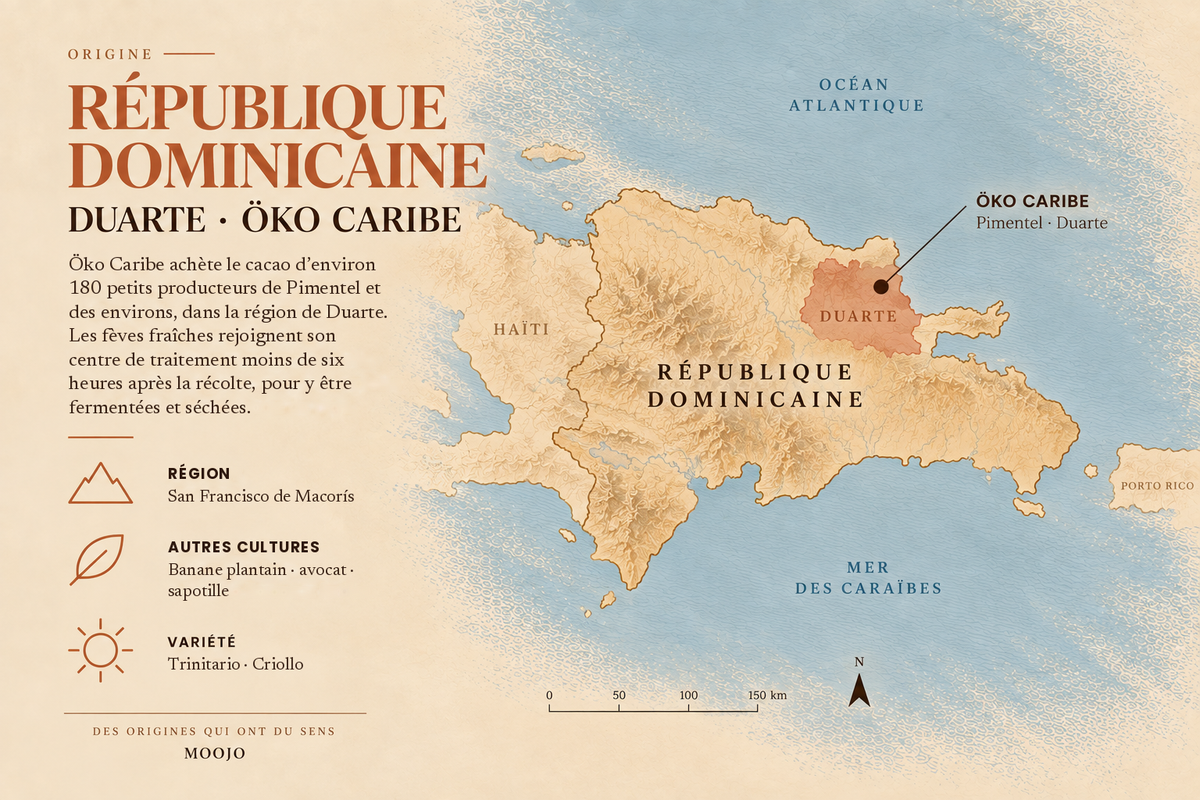
Duarte province, around Pimentel, south of the Cordillera Septentrional. Öko Caribe buys fresh cacao from smallholders. It ferments the cacao in one place, in wooden boxes, then dries it in solar tunnels. ‘Hispaniola’ cacao, fermented.
Country Dominican Republic
Harvest March to August
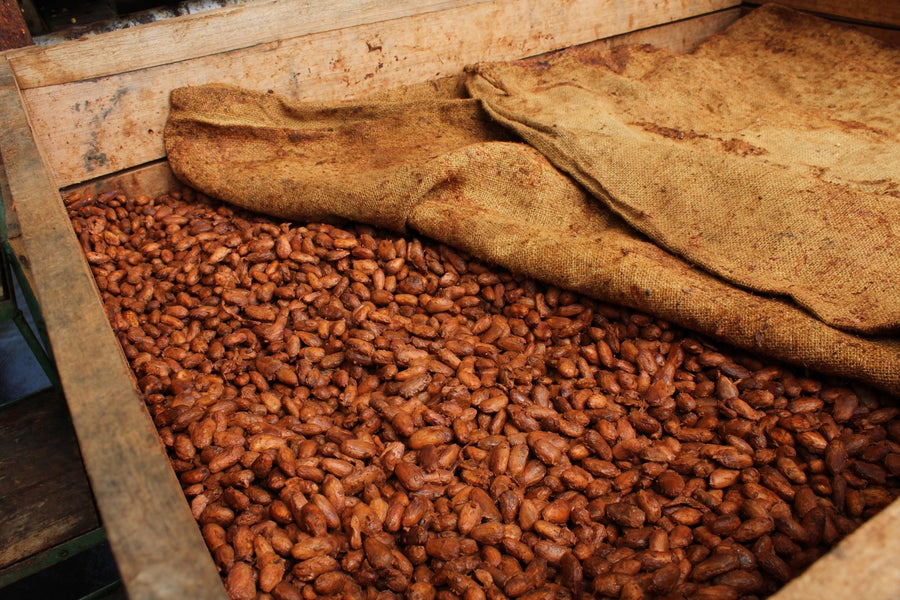
Fermentation Five to six days, in wooden boxes
Drying About ten days, under tunnels
Carte du terroir
Cérémonie de cacao
Dominican Republic · Öko Caribe · Ceremonial cacao250 gr Sale price€20,00

Territory

Pimentel, in the Duarte region

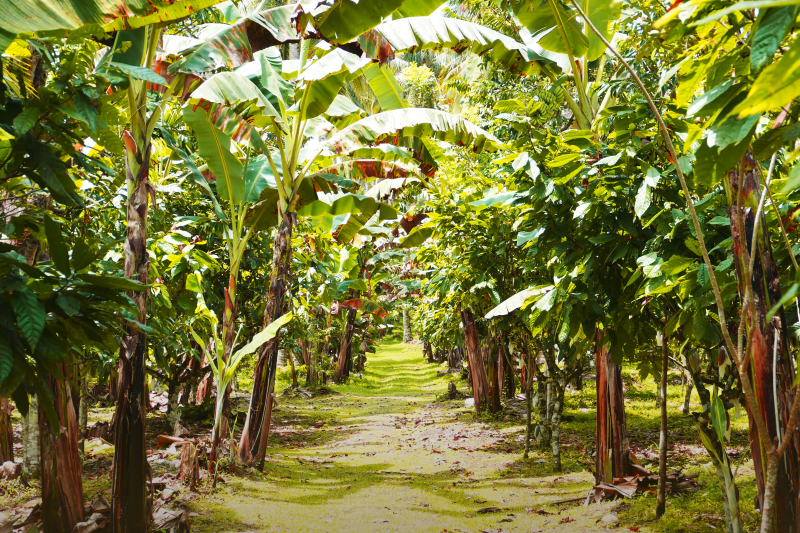
Öko Caribe works in the north-east of the Dominican Republic, in the Duarte region, around San Francisco de Macorís. The company is based in Pimentel, on the road to Nagua. Some hundred and eighty smallholders from Pimentel and the surrounding area sell it their cacao. Their farms average two hectares. They also grow plantain, avocado and sapodilla. The cacao trees are Trinitario and Criollo.

The people

A company, two founders

Öko Caribe was founded in 2006. Its name means “eco-Caribbean”. Its founders, Adriano and Gualberto, wanted to raise the standard of cacao quality. They were convinced that, to get there, they had to step away from common practice. Öko Caribe trains the growers in farming practices and supports them towards organic certification.

2006Year founded
A young woman and a young man smile in a cacao grove, their arms full of yellow, orange and red pods
Five women sort dried beans on a wooden table, in front of a yellow Öko Caribe sack
Building front with the Öko Caribe sign, two murals of the cacao harvest and bougainvillea in flower
The harvest, in the Öko Caribe networkSorting, by handThe Öko Caribe building, with its murals
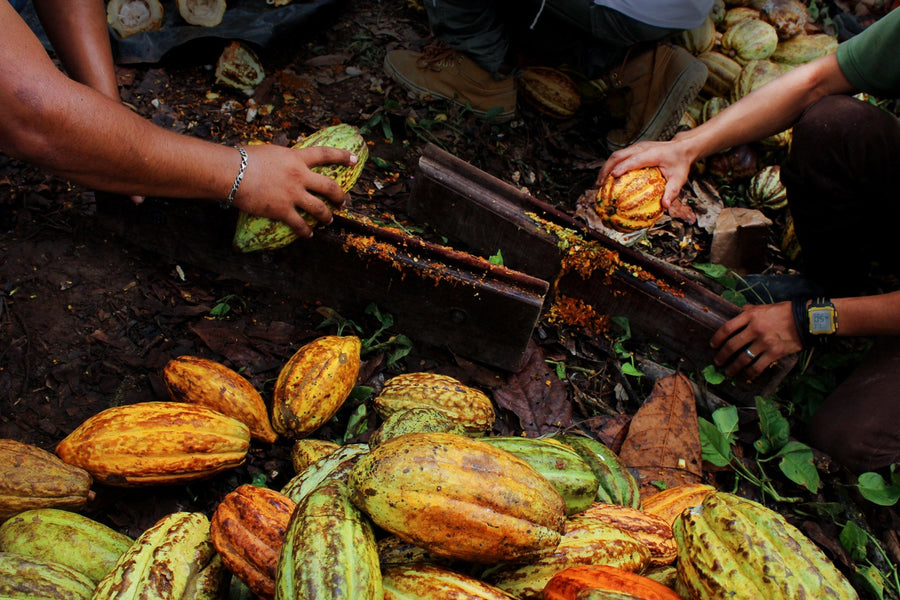
Fresh beans wrapped in their white pulp
The fresh beans, still in their pulp · Öko Caribe · Crafting Markets

The craft

Less than six hours after the harvest

Öko Caribe buys the cacao fresh, the beans still wrapped in their pulp. Within six hours of the harvest, they reach the processing centre. There the team ferments them for five to six days in wooden boxes set out in tiers, then dries them for about ten days under tunnels, on raised beds. It is a fermented cacao, the kind known as “Hispaniola” in the Dominican Republic.

Wooden fermentation boxes set out in tiers alongside a staircase, under a metal roof
The fermentation boxes, in tiers · Öko Caribe · Crafting Markets
Beans drying on two long raised beds, under a translucent plastic tunnel
About ten days of drying, under a tunnel · Öko Caribe · Crafting Markets

The sacks

Sorted by hand, then sacked

After drying, the beans are sorted by hand.

They are then packed in seventy-kilo sacks.

The harvest runs from March to August.

What we know about Öko Caribe comes from Crafting Markets, who connect us with them: an origin report, and these photographs.

Continue