

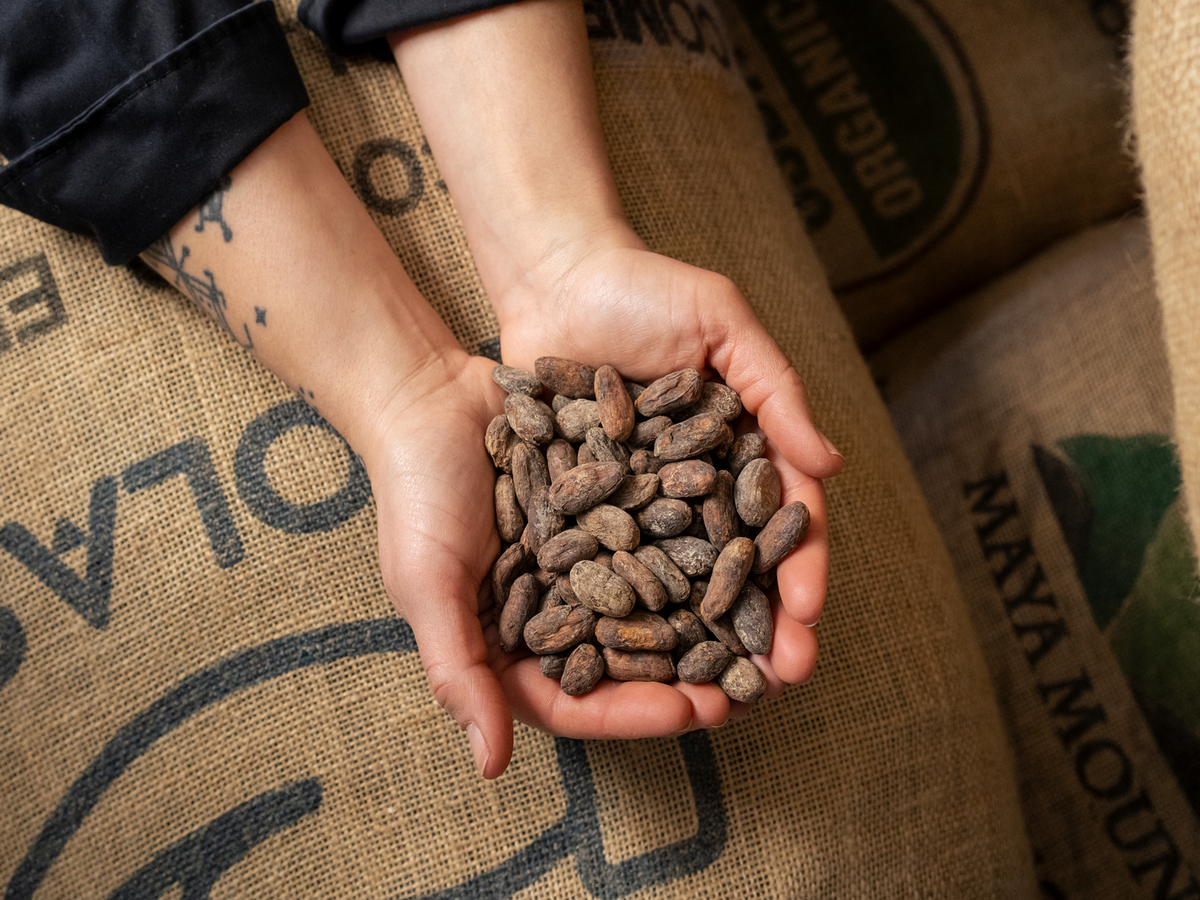
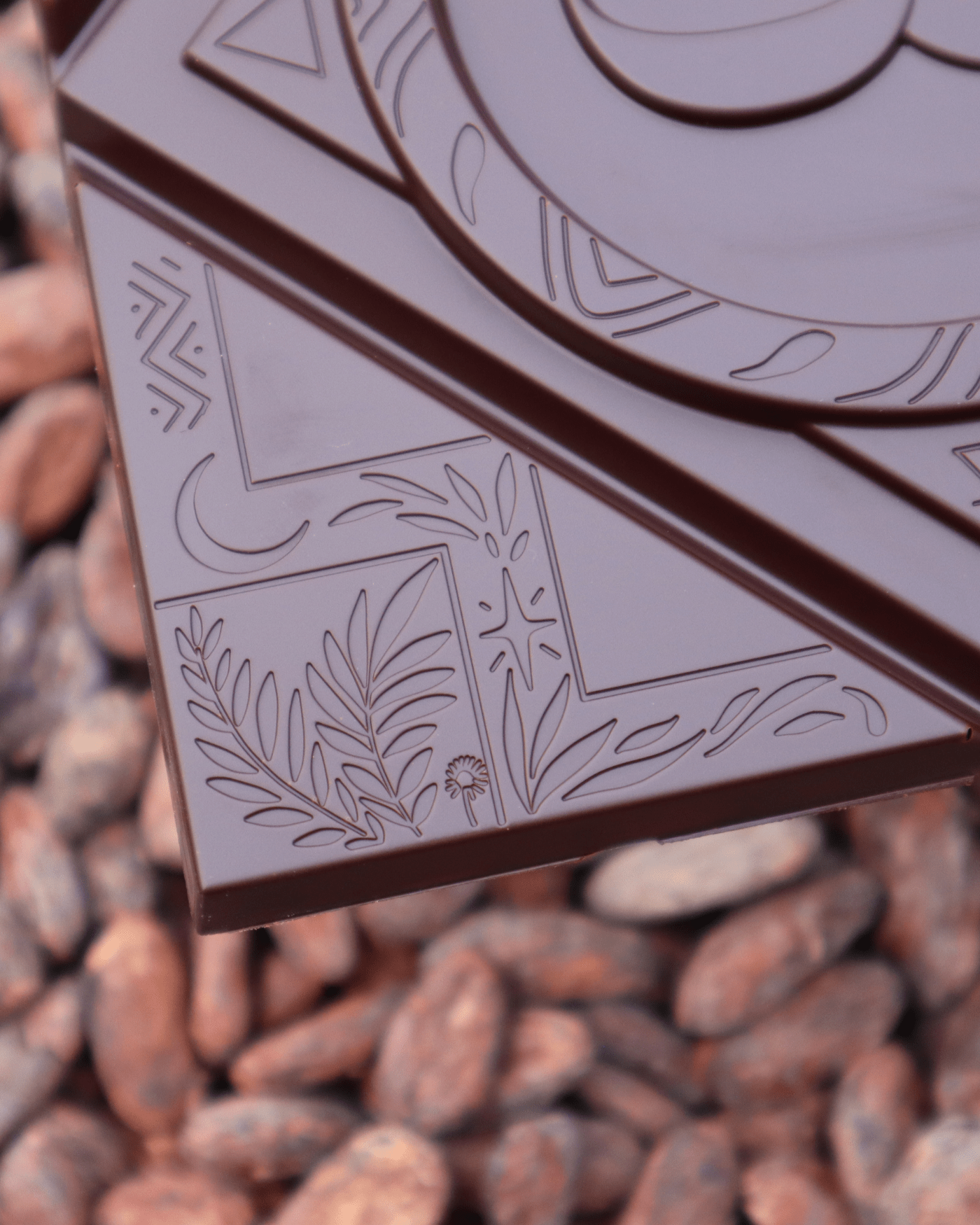


Each origin keeps its own voice
We do not mix origins to manufacture a MOOJO taste that comes back every year. A Chuncho should taste of Chuncho. When we blend, and it does happen, the label says so.


MOOJO · Heks, Belgium
A plant encountered on the banks of the Ucayali, in Peru, in 2012. Transformed today in the old tram station in Heks. In between, a single rule: never erase the place it comes from.
Chocolate is one of the paths cacao can take.
It is neither the first nor the only one.
We make both: pure cacao, for drinking and for grating, and dark chocolate bars. But we always start from the bean, the lot, the place. Everything that comes after must serve that starting point, never cover it up.
This is how we got here.

November 2012 · Nueva Betania, Ucayali
It all begins on the water. In November 2012, in Peru, there is an encounter: the Shipibo-Conibo community of Nueva Betania, on the banks of the Ucayali.
There, cacao is not a commodity. It is a plant you prepare, share and pass on, like the other plants that grow around it. You do not savour it: you sit with it.
We did not become its heirs. This tradition does not belong to us. But that encounter is not one you forget: it left us unable to treat cacao as an interchangeable raw material.
Wild cacao was within us.
A love of passing it on was born. Jonathan Denis & Mounia Ben Haddou, founders

The choice
We could have bought ready-made couverture, melted it, flavoured it and put our name on it. Many chocolatiers work that way, and there is nothing shameful in that.
But it is between the bean and the bar that a terroir is kept or lost: in the heat of the oven, under the stone grinder, through the long hours of refining. To hand that work to others is to hand the taste of a place to someone whose story it is not.
So we do it ourselves, lot after lot. Volumes stay small, and an origin ends when its lot runs out. That is the rhythm of cacao, and we have made it ours.


Heks, Limburg
The MOOJO workshop lives in Heks, in the village's old tram station. A brick house beside a meadow, our name set on the wall. It is called La Station: the name was here before us, and we kept it.
Inside, a bright room with stainless steel tables, an oven, a stone grinder, a winnower, a tempering machine. The air conditioning runs all year round to hold the temperature, and a door opens onto the meadow. Each lot takes its turn here, and we taste every batch before it leaves.
When summer warms the room, we lower the tempering setting rather than force the chocolate. Cacao sets the pace, and we follow it.
What we hold to
We do not mix origins to manufacture a MOOJO taste that comes back every year. A Chuncho should taste of Chuncho. When we blend, and it does happen, the label says so.
In our bars, cacao leads. The share of sugar follows what each lot can carry, never a range decided in advance. Cane sugar, always in the minority, with no added flavouring and no fat that is not cacao's own.
Fermentation generates its own heat. In the workshop, we then work with lots that are unroasted or roasted at low temperature. Those words say how the cacao has been treated more precisely than “raw”.
MOOJO does not hold an overall organic certification. Some of our origins arrive certified organic and fair trade; others are shade-grown, without inputs, by producers our partners know. We give each lot its place and its name.

The two of us
MOOJO is Mounia Ben Haddou and Jonathan Denis. Ideas and recipes are most often born with Jonathan; Mounia elevates them. He looks after the roasting and winnowing. Tempering, maturing and moulding: those we do together. Mounia carries the story, leads the workshops and sets the tone of our social media; Jonathan keeps the website running. Our two daughters are growing up in a house that breathes cacao.
MOOJO lives within MOONLODGE, a non-profit association (ASBL). There are no shareholders to pay: whatever the business earns goes back into the cacao, the equipment and the people. We are thinking about becoming a cooperative, and the question remains open.
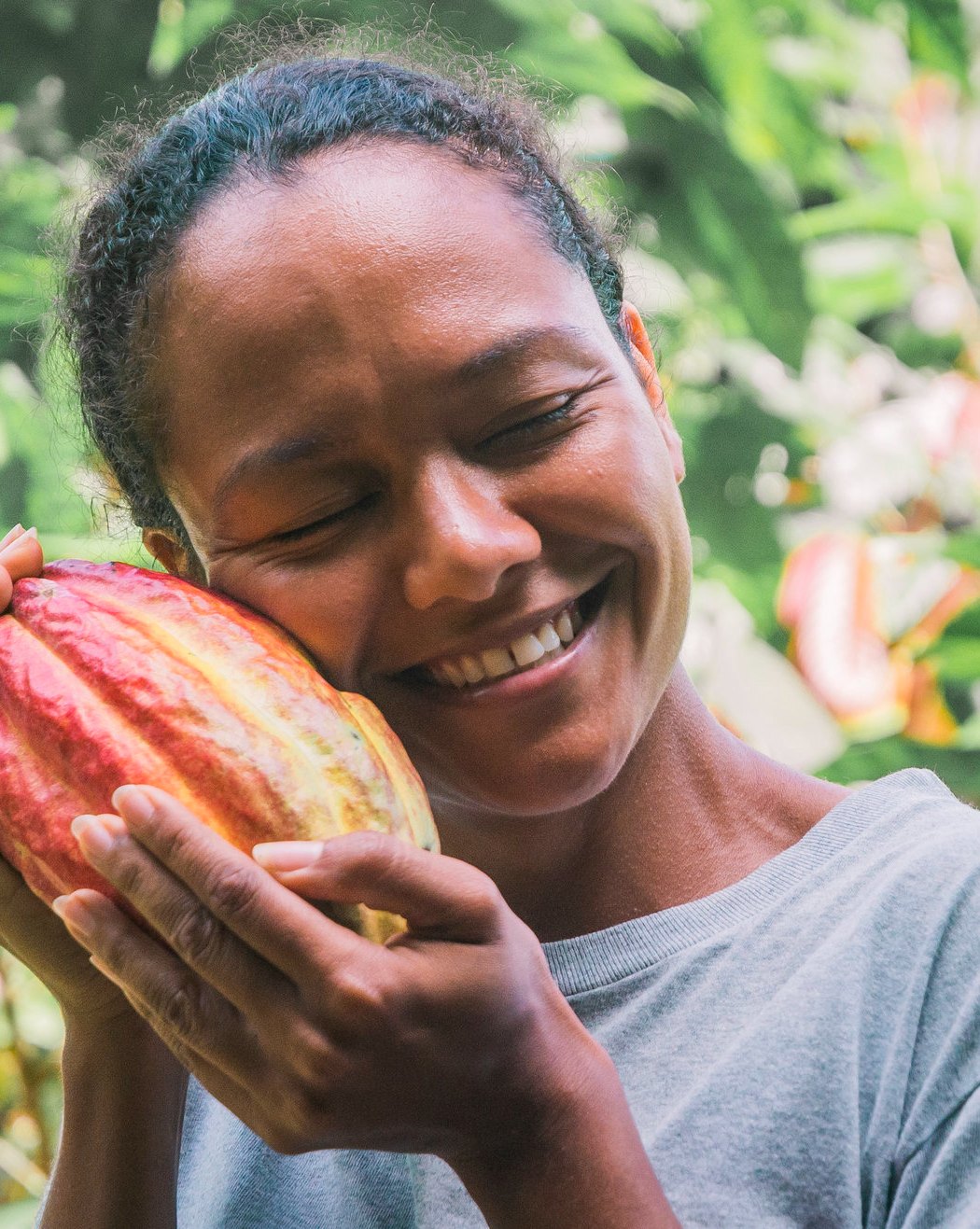
A terroir is not made. It is kept.MOOJO workshop, Heks

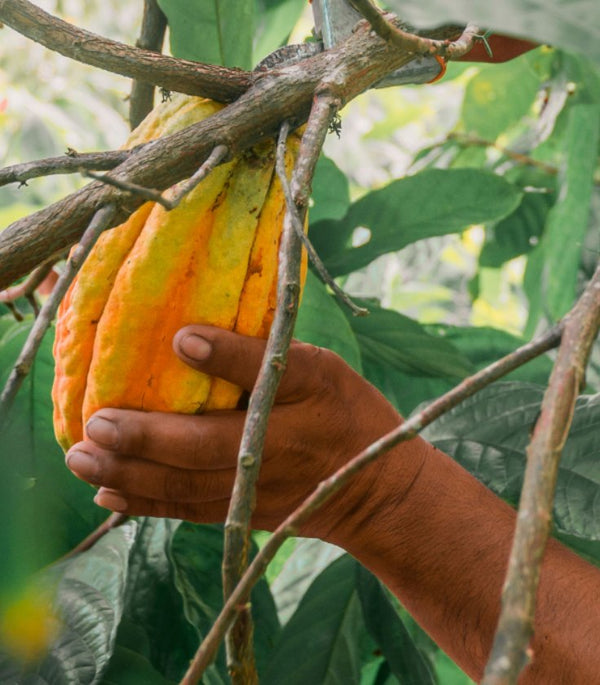
Start with one origin
Belize · Maya Mountain
In southern Belize, a cacao that grows among banana and mango trees.
Discover Maya MountainNow
This autumn, we are planting hazelnut trees at La Station, in an agroforestry system. Hazelnuts play an ever larger part in what we make: we want to learn to grow them, rather than going ever further afield to find them.
An oven, a stone grinder and a tempering machine cost more than a young artisan can afford. Our plan in Heks: to open our machines to other hands, rather than watch them multiply.
When the world price of cacao soared, we froze our prices for a year, then passed on about 10%. One thing did not move: what goes to the people who grow it.
Our story ends here. The beans' story carries on,
over there, with the families who harvest them.