Skip to content

Cart

Your cart is empty

Continue shopping
EXPLORER LES ORIGINES
Voir toutes les origines

Revival

Lightly roasted

Tabasco, along the Río Samaria

Revival
Get my access · opens 26.10 (opens in a new tab)

Tasting notes

Fruity

Texture

Intense & astringent

Cultivar

Trinitario

Recommended dose

20–40 g

Making a drink
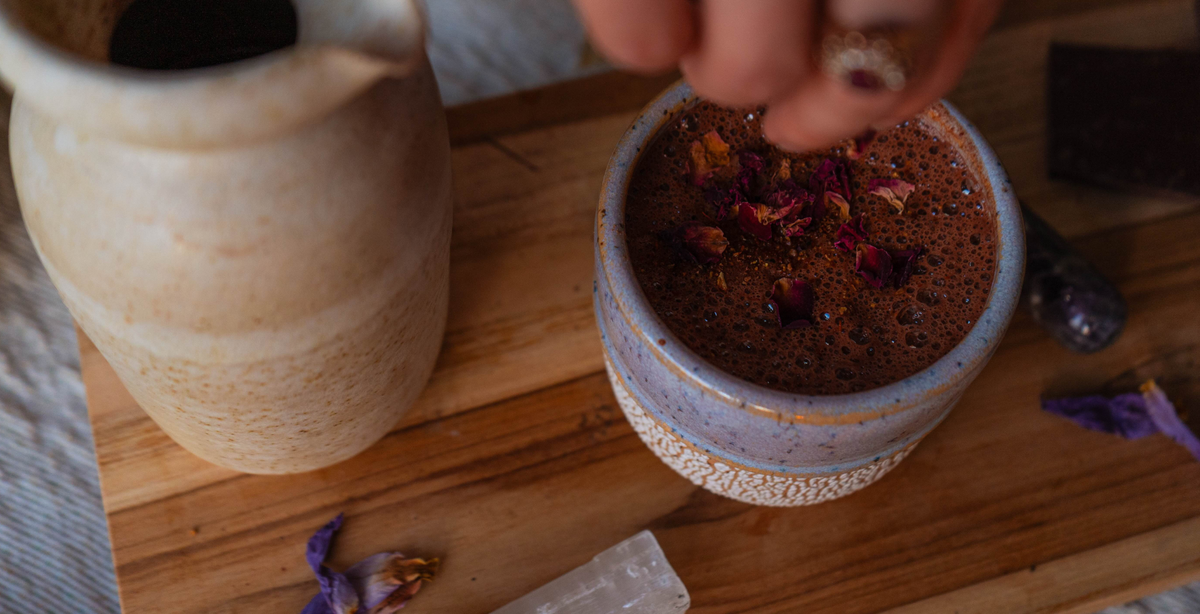
  1. For a pure cacao drink, allow 20–30 g per cup, or 30–40 g for a denser texture. With a chocolate bar, adjust the amount to your taste: it already contains sugar.
  2. Grate or break up the cacao or chocolate.
  3. Heat the water, or a plant-based drink, without bringing it to the boil: 60 to 65 °C at most.
  4. Pour over the pieces, let them melt, then beat with a whisk or a molinillo until you get an even foam.
Sale price€9,50
Size: 60 gr

In stock · Ships within 24 to 72 hours

  • Shipped Monday and Thursday

  • Stone ground

Ingrédients & valeurs nutritionnelles

Cocoa mass, cocoa butter. Cocoa solids: 100%.

Valeurs moyennes pour 100 g
Énergie 2479 kJ / 600 kcal
Matières grasses 50,3 g
dont acides gras saturés 30,1 g
Glucides 30,6 g
dont sucres 0,3 g
Fibres alimentaires 14,7 g
Protéines 13,5 g
Sel < 0,013 g

May contain traces of nuts. Made in a workshop that also handles other nuts.

The terroir

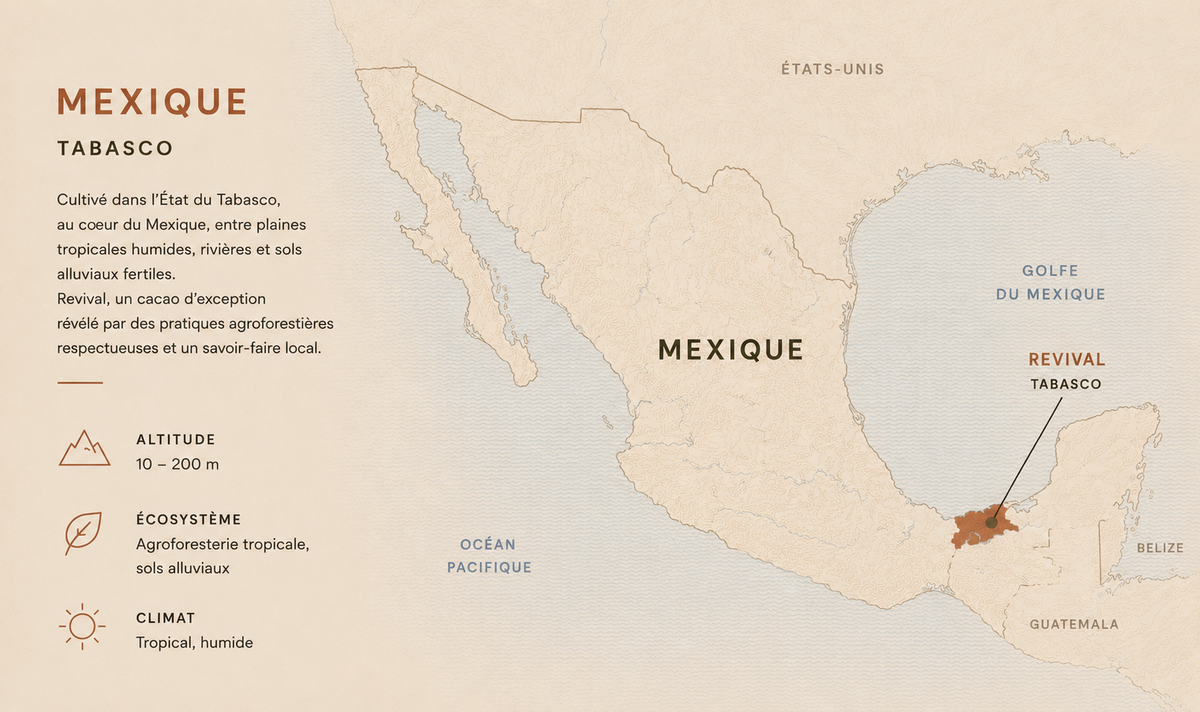
In the Chontalpa plain, in Tabasco, between 10 and 50 m, the Río Samaria runs past fertile alluvial soils (fluvisols), in a hot, humid climate. This plain is said to be the pre-Columbian cradle of Mexican cacao. The cacao that bears the river's name ferments for 7 to 9 days in mango-wood boxes.
Country Mexico
Harvest November to March
Altitude 10–50 m
Fermentation 7–9 days in mango wood boxes
Drying Raised beds or patios under netting; gas dryer if needed
Roasting Lightly roasted
Carte du terroir
Cacao cérémoniel
Mexico · Revival · Ceremonial cacao60 gr Sale price€9,50
Versants forestiers, bassin du Mezcalapa

Tabasco · Río Samaria

Río Samaria

La plaine entre les bras du Mezcalapa.

Territory

The plain between the arms of the Mezcalapa

The Mezcalapa comes down from Chiapas and divides: the Carrizal on one side, the Samaria on the other. The Samaria waters the Chontalpa, home to Cunduacán, where this lot comes from.

This low plain, between ten and fifty metres, has alluvial soils. From 1965, the Plan Chontalpa drained the marshes and opened up land for growing rice, maize, citrus and cacao.

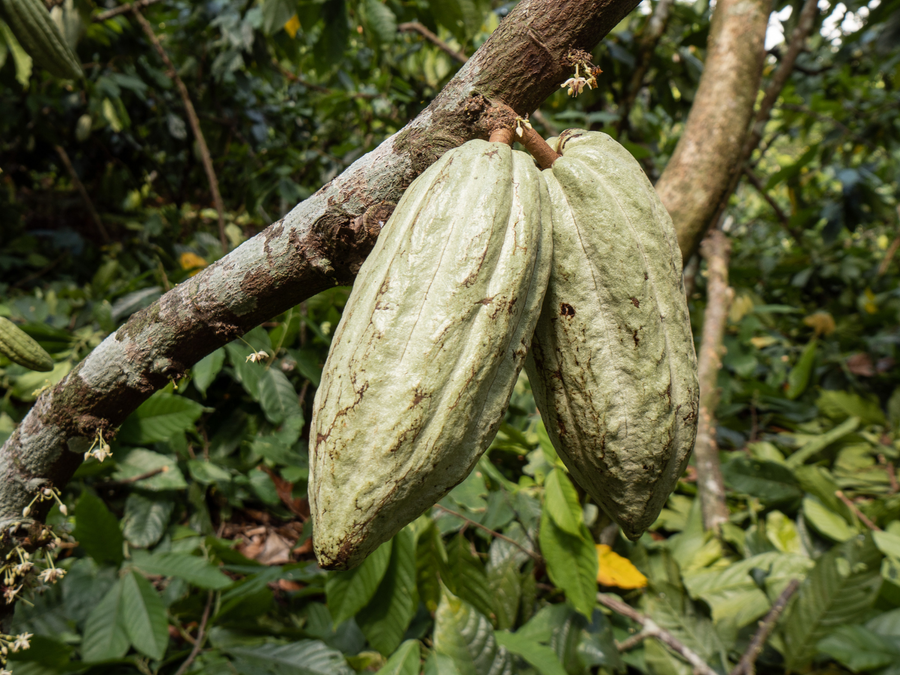
Cacaoyer dans la parcelle, Río Samaria

The living

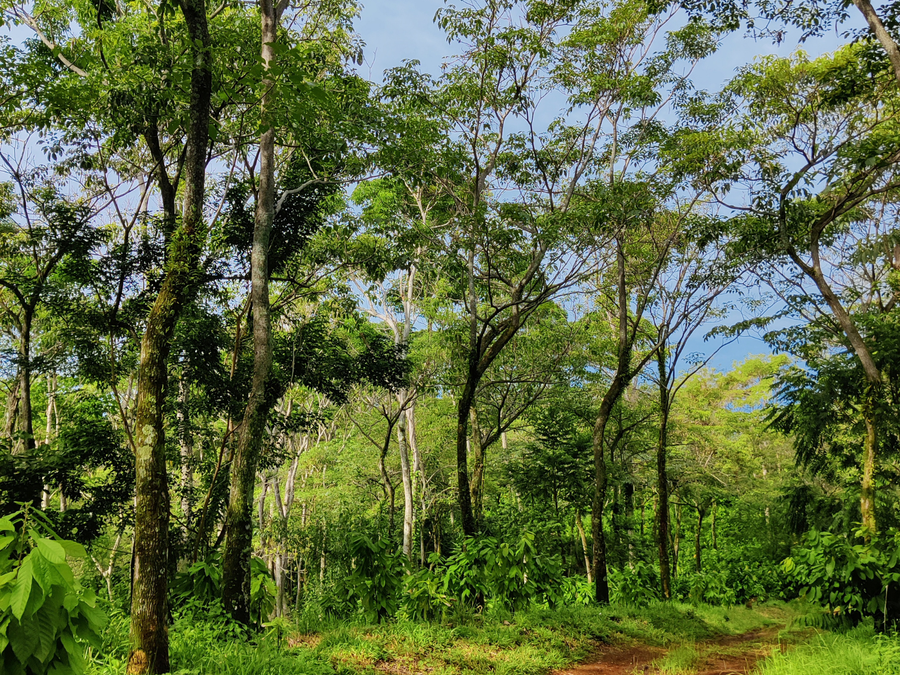
A garden of the plain, not a forest

Forty per cent shade cover, and beneath that shade the cacao shares the plot with banana, plantain, mango, orange, lemon, hibiscus and criollo chillies. The trees are low, pruned, in rows; between the rows, a litter of russet leaves as thick as a carpet. The pods grow straight from the trunk, right at ground level, in clusters of fifteen. Here trinitario dominates, known locally as puntudo, alongside some forastero, the calabacillo. Criollo, of which this plain is said to be the cradle, now survives here only in very limited quantities.

Rangs taillés et litière de feuilles, Río Samaria

The gesture

Seven to nine days in mango wood

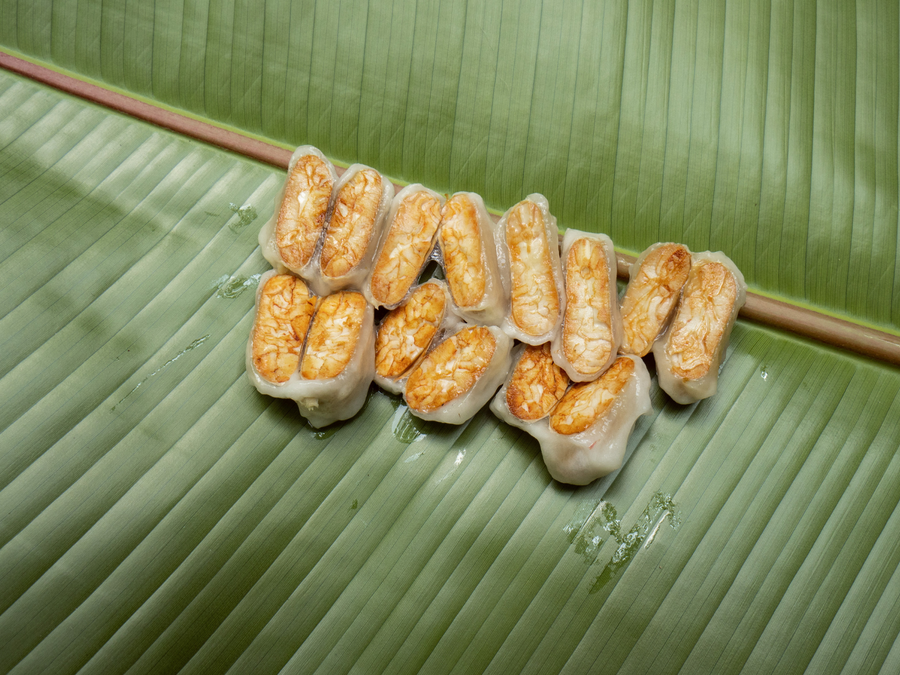
At Revival Cacao, the beans arrive still wrapped in their pulp. They are tipped into mango-wood boxes and covered with banana leaves. Fermentation lasts seven to nine days, with several turnings.

To follow it, a thermometer is pushed into the mass and beans are cut open with a blade: the inside turns from purple to brown. Drying takes place on patios under nets, with a gas dryer when the rain demands it.

Caisses couvertes de feuilles de bananier, Río Samaria

Genetics

Río Samaria, a trinitario

The lot bears the name of the river that crosses the plain: Río Samaria. It is a fermented trinitario. On the palate, date and plum, then coffee and chocolate, and finally passion fruit and tamarind.

Nos fèves sont sourcées par Cacao Latitudes.

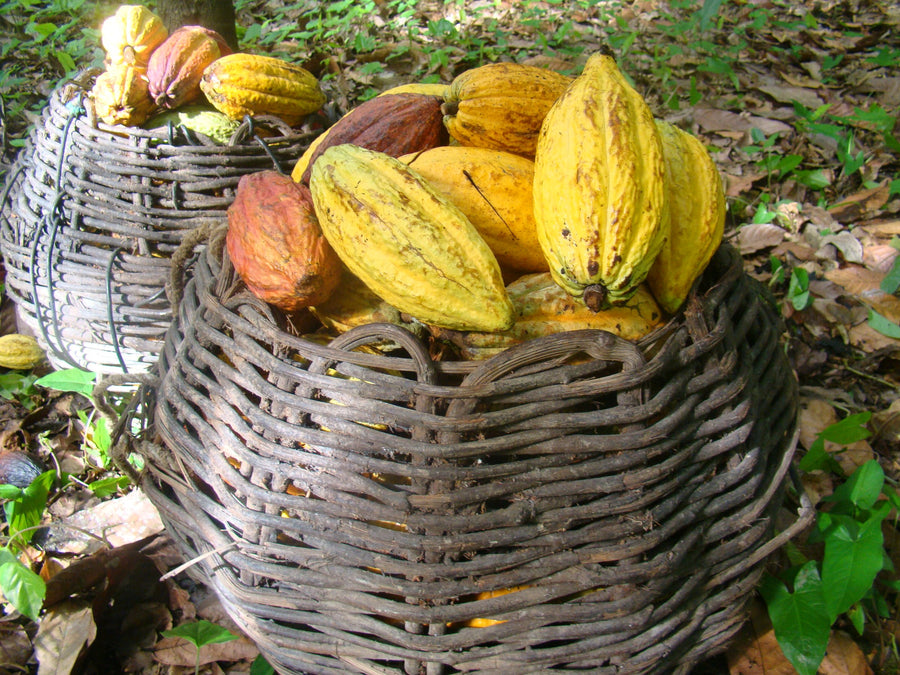
Cabosses de plusieurs couleurs, Río Samaria

Épisode 03

The Real White Chocolate

Les autres épisodes

Film d'origine