Skip to content

Cart

Your cart is empty

Continue shopping
EXPLORER LES ORIGINES
Voir toutes les origines

Tuq'tuquilal

Wood-fire roasted by Tuq'tuquilal

Lanquín, ancestral tree to bar

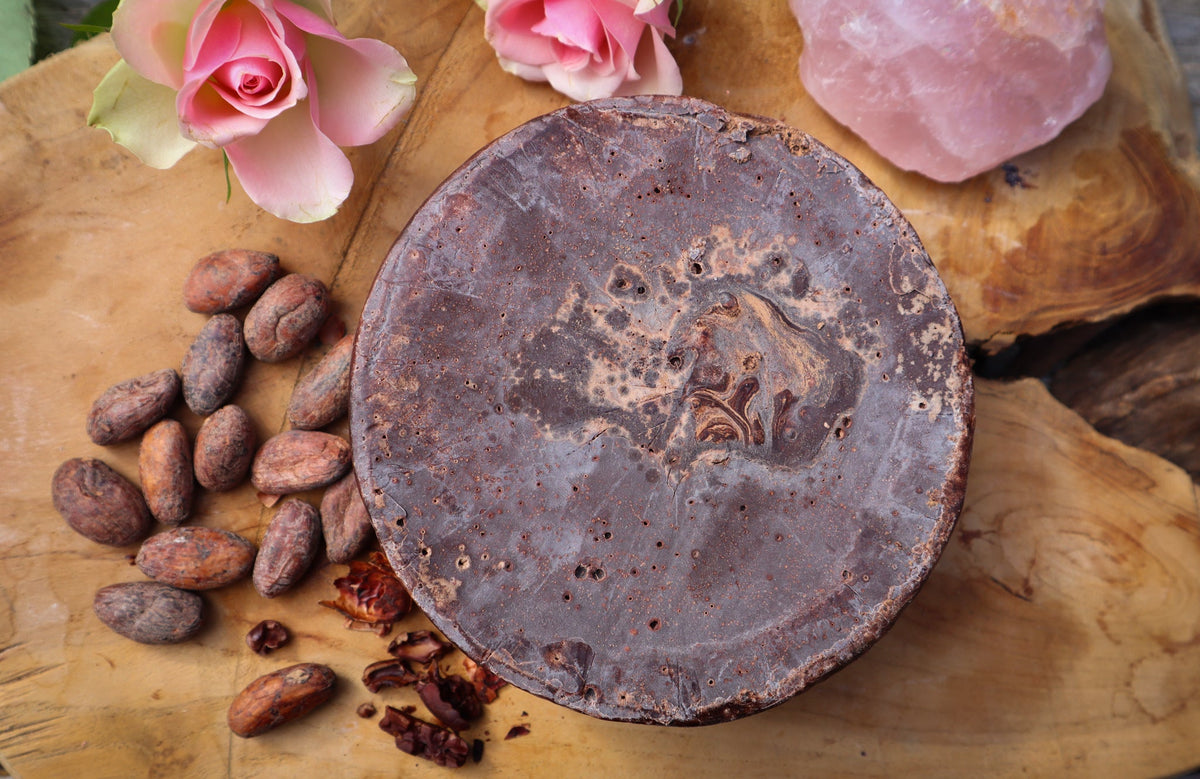
Round pure cacao disc on a wooden board, with beans and a rose · Guatemala Tuq'tuquilal
Join us on Monday 26 October. Voices of Cacao Where the ritual begins Songs, gestures, films and readings from the lands where cacao grows. Get my access (opens in a new tab) Alta Verapaz 3 to listen · 15 to watch · 11 to read

Tasting notes

Fruity · Woody / Earthy

Texture

Dense and rustic, fine grain

Cultivar

Criollo · Fino de Aroma

Recommended dose

20–30 g per ritual

  • Everyday 10–20 g
  • Creative 20–30 g
  • Ceremonial 30–40 g
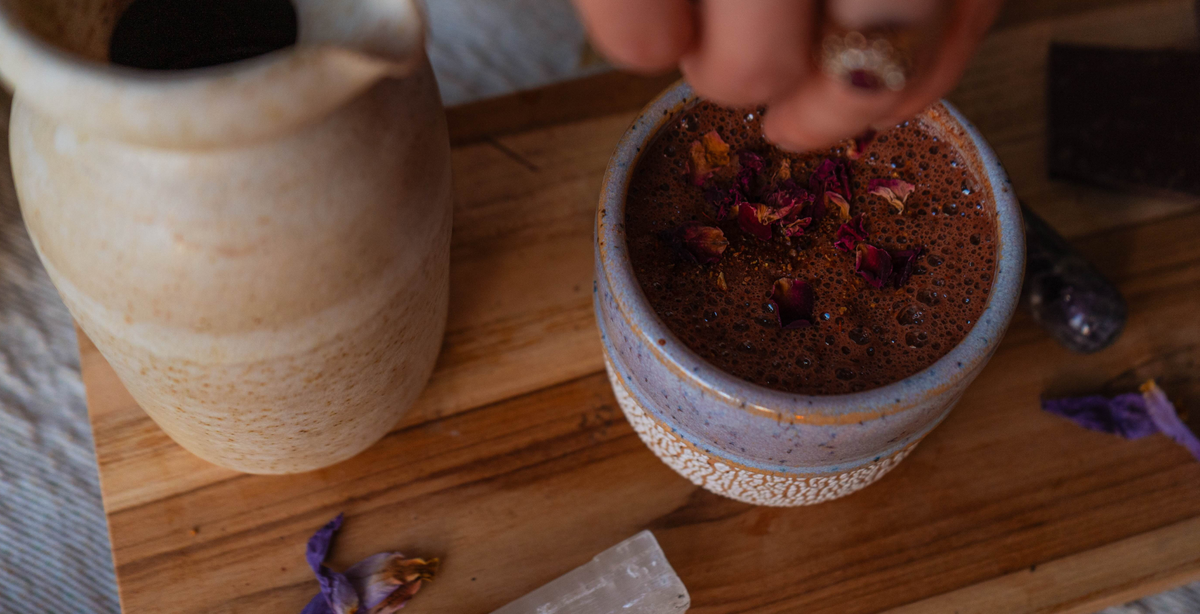
Making a drink
  1. For a pure cacao drink, allow 20–30 g per cup, or 30–40 g for a denser texture. With a chocolate bar, adjust the amount to your taste: it already contains sugar.
  2. Grate or break up the cacao or chocolate.
  3. Heat the water, or a plant-based drink, without bringing it to the boil: 60 to 65 °C at most.
  4. Pour over the pieces, let them melt, then beat with a whisk or a molinillo until you get an even foam.
Sale price€100,00
Size: 1 kg

In stock · Ships within 24 to 72 hours

  • Shipped Monday and Thursday

Ingrédients & valeurs nutritionnelles

Cocoa mass, cocoa butter. Cocoa solids: 100%.

Valeurs moyennes pour 100 g
Énergie 2479 kJ / 600 kcal
Matières grasses 50,3 g
dont acides gras saturés 30,1 g
Glucides 30,6 g
dont sucres 0,3 g
Fibres alimentaires 14,7 g
Protéines 13,5 g
Sel < 0,013 g

May contain traces of nuts. Made in a workshop that also handles other nuts.

The terroir

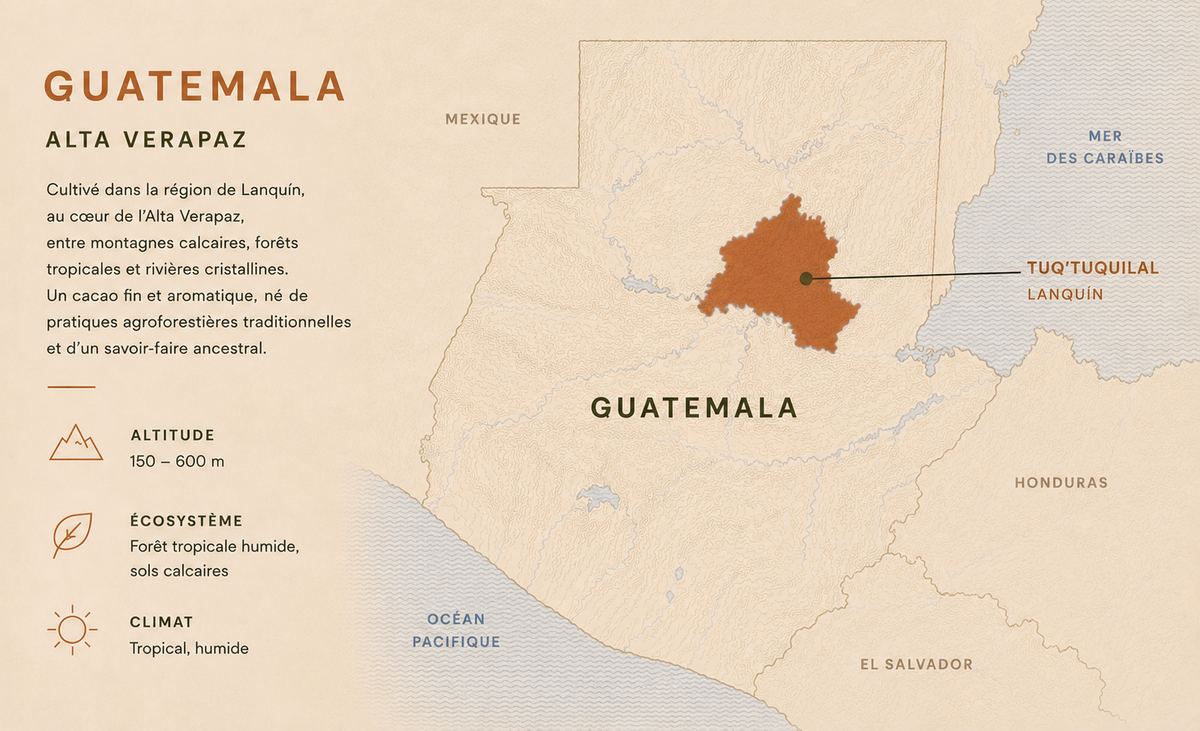
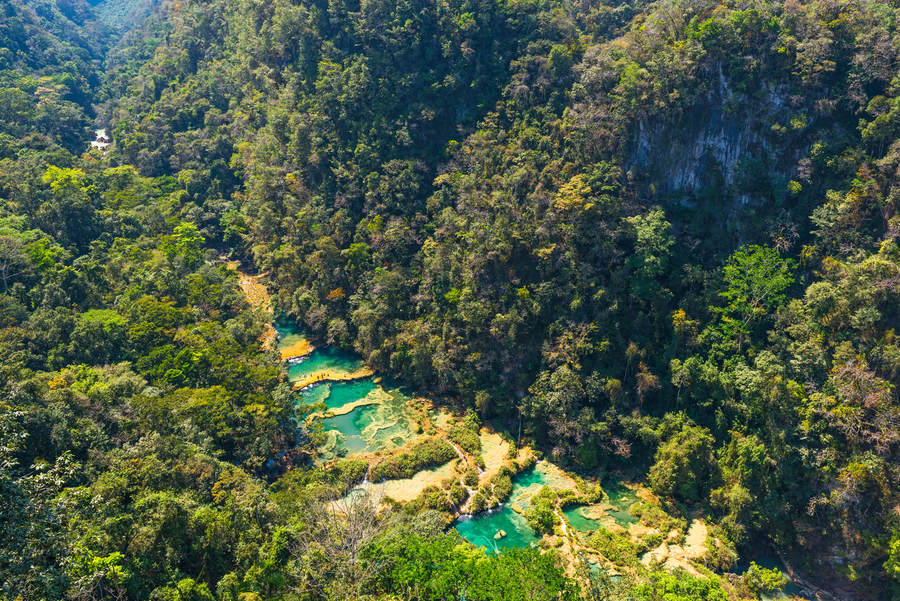
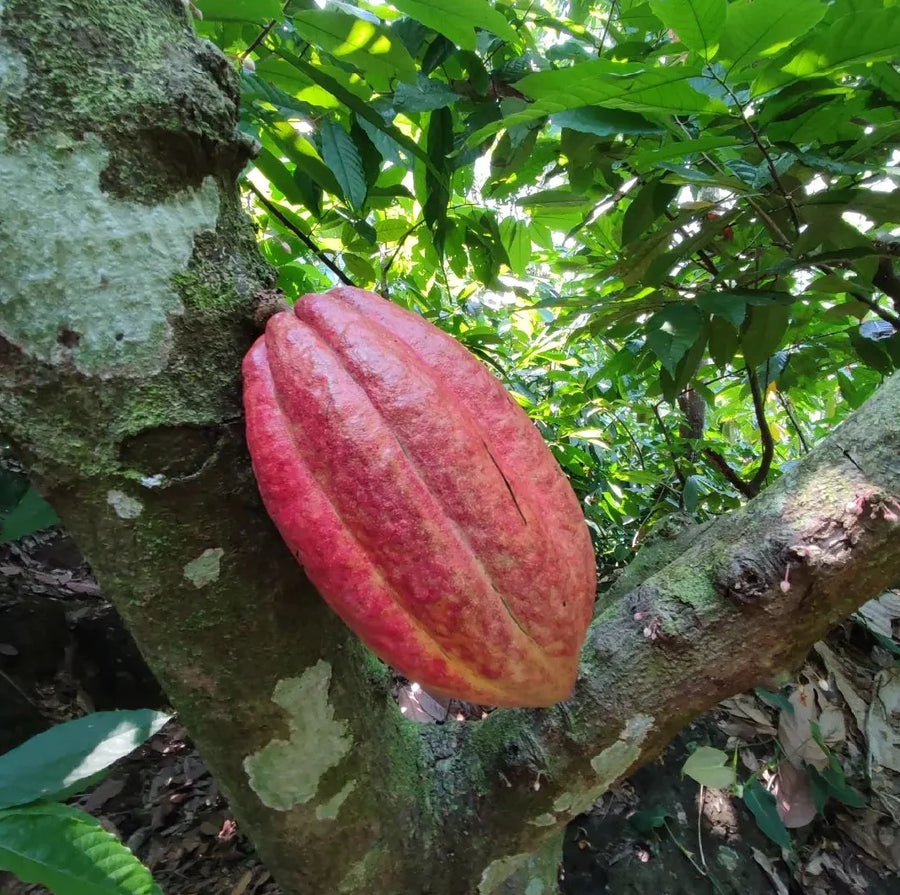
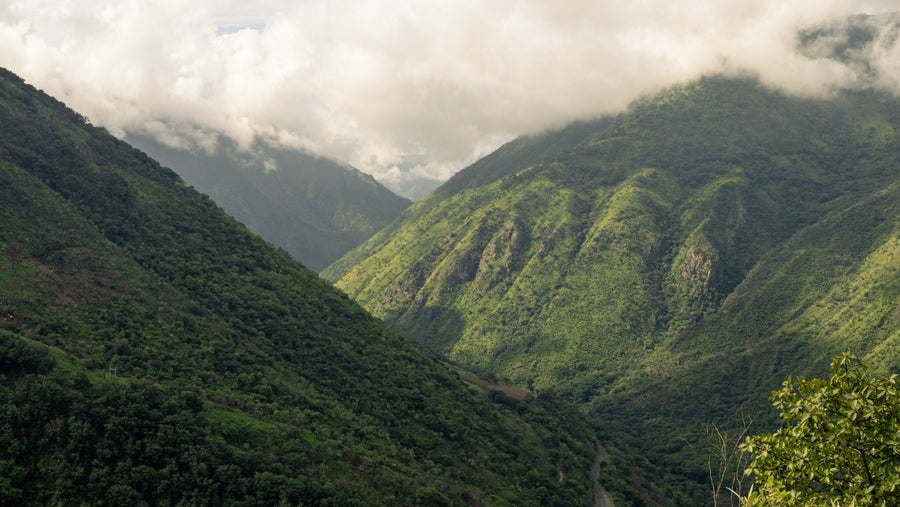
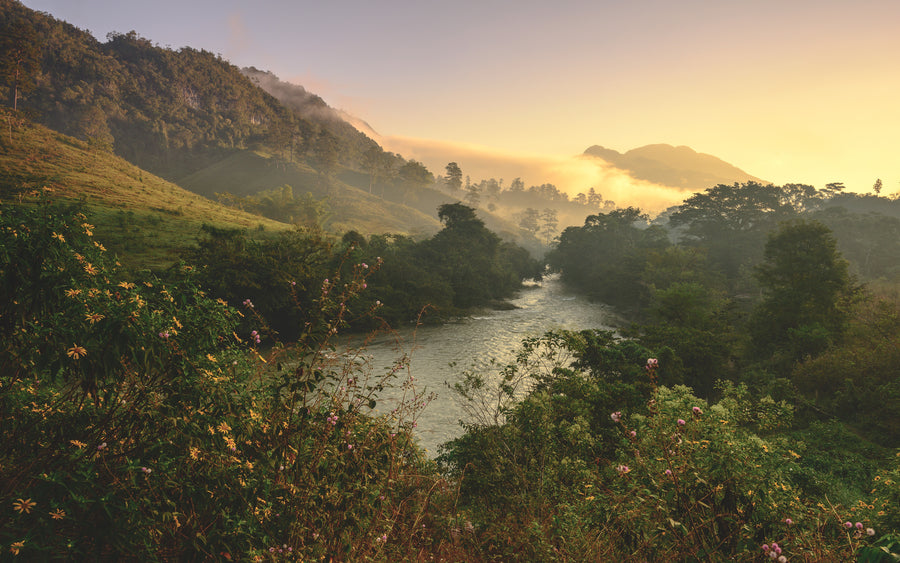
Lanquín, in Alta Verapaz, between roughly 300 and 600 m: humid mountains along the Cahabón River. The families of the Red Ratzum network grow cacao here; the Tuq'tuquilal centre roasts it over a wood fire, peels it by hand and grinds it into pure cacao mass, which we buy as it is.
Country Guatemala
Harvest From October to February
Altitude 300–600 m
Fermentation In wooden boxes under plantain leaves, followed daily (Tuq'tuquilal centre)
Drying Drying house, beans turned three times a day
Roasting Wood-fire roasted by Tuq'tuquilal
Carte du terroir
Chunks #Taille_500 gr
Guatemala · Tuq'tuquilal · Ceremonial cacao1 kg Sale price€100,00
Rivière et collines au matin, Lanquín

Lanquín · Alta Verapaz

Tuq'Tuquilal

Le Cahabón disparaît sous le calcaire. Le cacao pousse entre 300 et 600 mètres, sous couvert.

Territory

The Cahabón vanishes beneath 300 metres of limestone

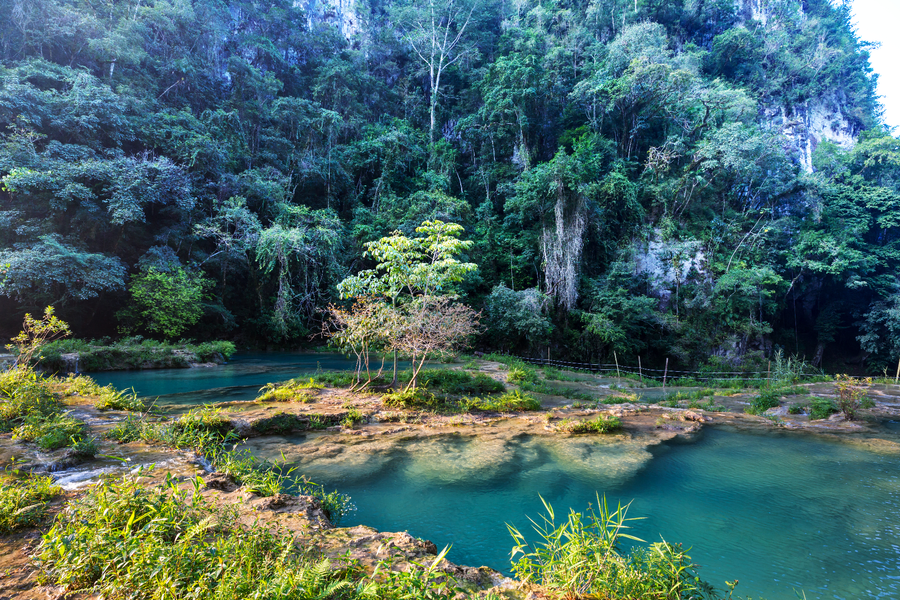
Lanquín is a small town in Alta Verapaz, set on limestone. One kilometre to the west, the Grutas de Lanquín open up, a national park since 1955. Downstream, the Cahabón, a hundred and ninety-six kilometres from the Sierra de las Minas to the Polochic and Lake Izabal, plunges beneath a three-hundred-metre natural bridge; on top of this bridge, turquoise pools rise in tiers, at an altitude of three hundred and eighty metres. This is Semuc Champey, a natural monument since 2005, managed by CONAP and the municipality. Red Ratzum's cacao grows between three hundred and six hundred metres, under canopy, on the same slopes.

Ce documentaire est le nôtre. Il a été tourné à Tuq'Tuquilal, à Lanquín.

Documentaire de l'Alta Verapaz. MOOJO.

Peoples

55 families, and the day the buyer could no longer keep up

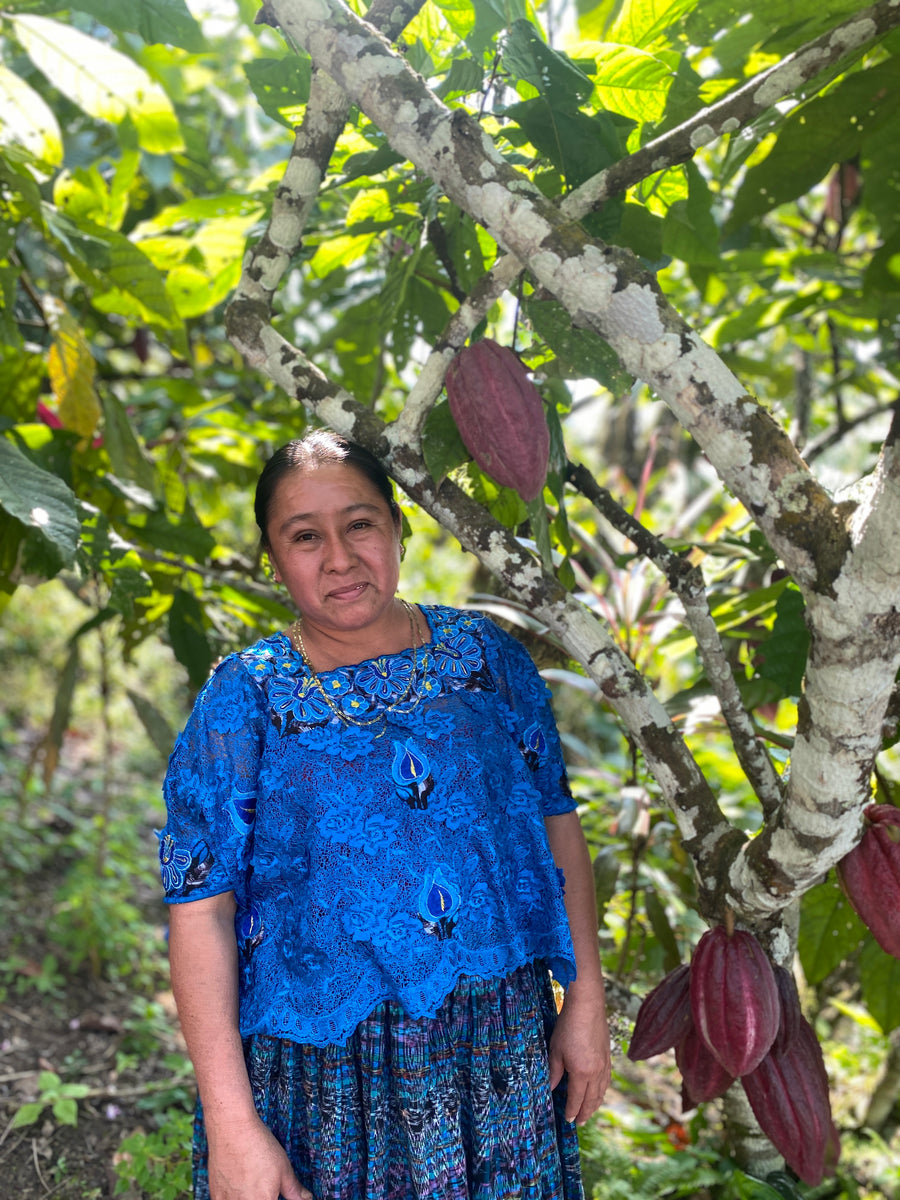
Red Ratzum Cacao, the cacao flower network, brings together fifty-five Q'eqchi' families between Lanquín and Cahabón: San Juan Chivite, Chicanchiu, Saqvija' and Chivail.

The network was born of a walk, in 2020. Pedro Rax, María Cardona and Juanita Pérez cross the first three communities on foot and stop for lunch where two paths meet. Passers-by stop in turn. By sunset, a first group of families has formed the network.

The shared constitution, signed by every family and adopted at the centre's altar, sets the price and the quality. The centre then raises its purchase price step by step, to the point where the regional buyer can no longer keep up.

L'assemblée des familles, sous un abri, Tuq'Tuquilal

The gesture

A clay comal, a wood fire, a spatula

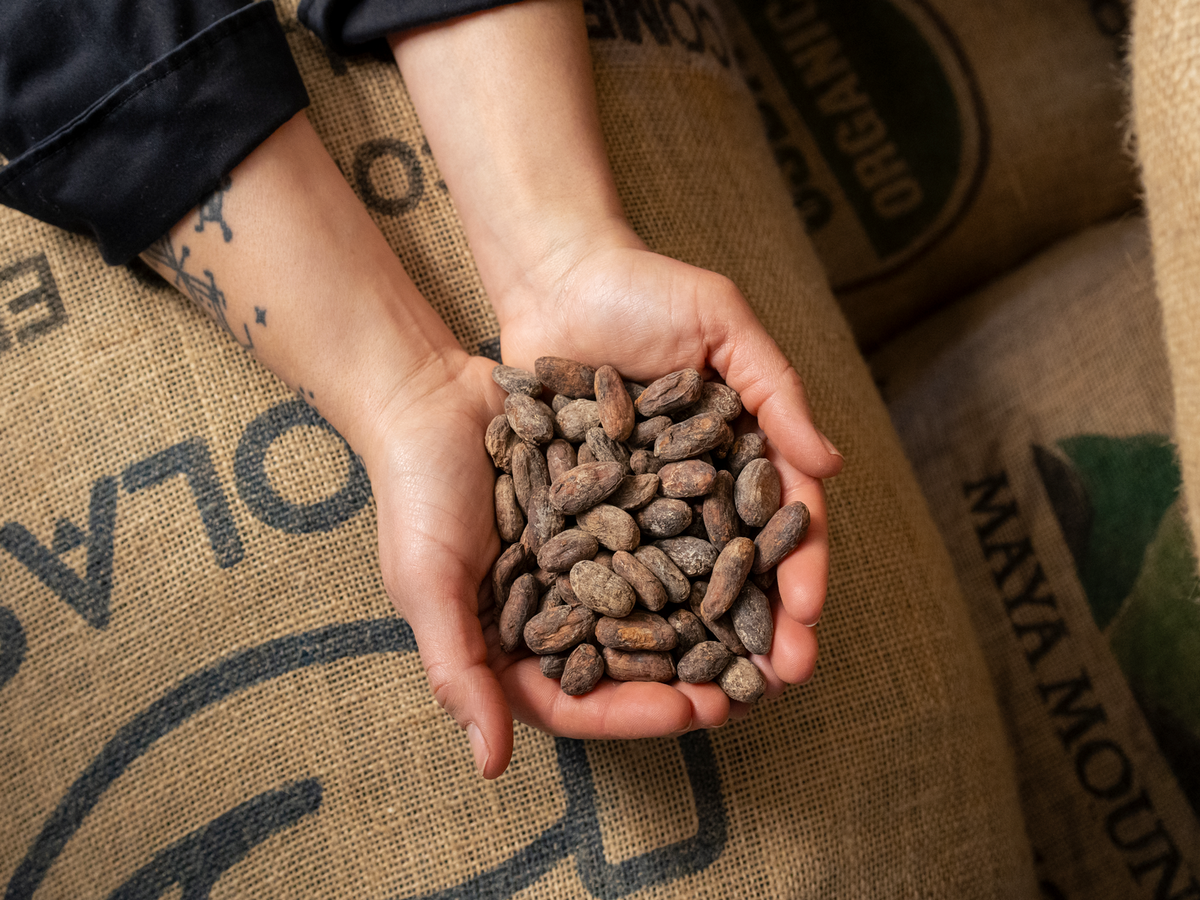
Roasting takes place outdoors, under a thatched shelter, on large clay comales set on stones, over a wood fire tended by hand. The beans are stirred with a wooden spatula, without a thermometer. Then comes the peeling: the beans are shelled one by one on a wooden table, husks to one side, kernels into basins, and this work falls mostly to the women of the collective. Grinding is done on site. The mass is poured by hand, wrapped by hand in waxed paper sealed with a flour-and-water glue, then stored in an air-conditioned room. We buy it as it is, with the grain and the flavour the centre has given it.

Une spatule de bois sur un comal, au-dessus du feu, Tuq'Tuquilal

Post-harvest

Nine boxes, odourless wood, and 32% of the weight

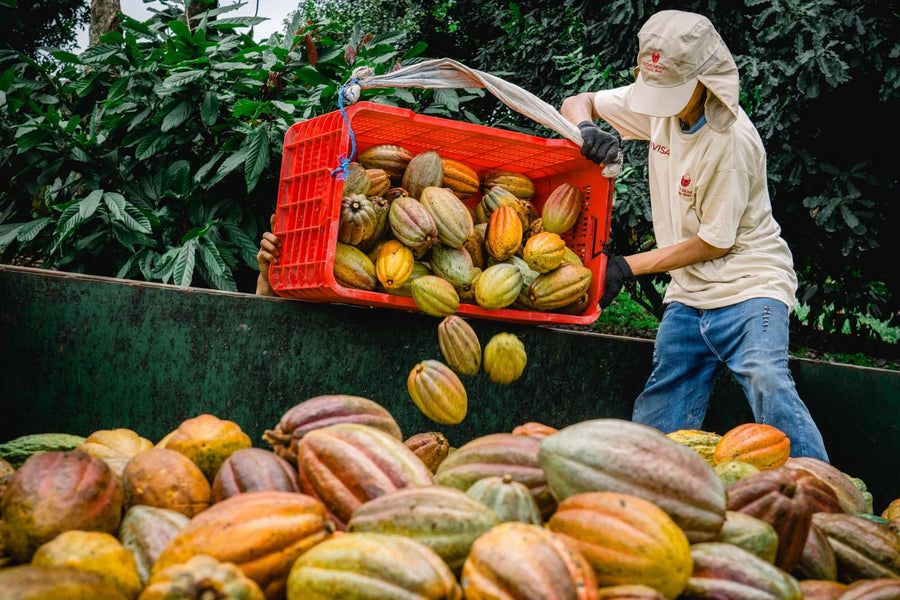
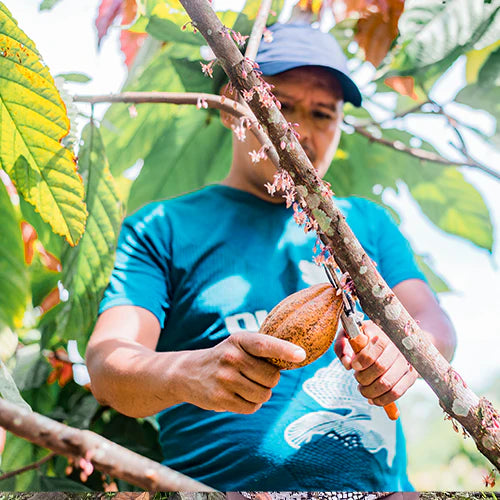
The pulp reaches the centre on the day of purchase. The sacks are opened and inspected before weighing, labelled with the family's name, then inspected a second time before being emptied. Nine fermentation boxes keep the lots separate by community; they are lined with plantain leaves and made of San Juan wood, chosen because it has no smell. Fermentation is checked every day. Drying takes place in a drying house, where the beans are moved by hand three times a day and any mouldy beans are removed from the lot along the way. Moisture is measured with a meter, bagging happens at between five and six per cent, and moisture is checked again before every shipment. From pulp to dry beans, thirty-two per cent of the weight remains.

Caisse de bois garnie de feuilles de plantain, fèves en fermentation, Tuq'Tuquilal