




Journal · Dominican Republic
Öko Caribe
Where the beans for our ceremonial cacao, butter and powder come from: Pimentel, in the province of Duarte.

Öko Caribe has its fermentation and drying centre in Pimentel, in the province of Duarte, in the Cibao region of the Dominican Republic. Duarte is the province with the most cacao plantations in the country. Near Pimentel, the Camú flows into the Yuna; just to the north runs the Cordillera Septentrional. Growers in the surrounding area cultivate cacao on small farms, in partial shade, among avocado, banana and orange trees.
Six hours at most
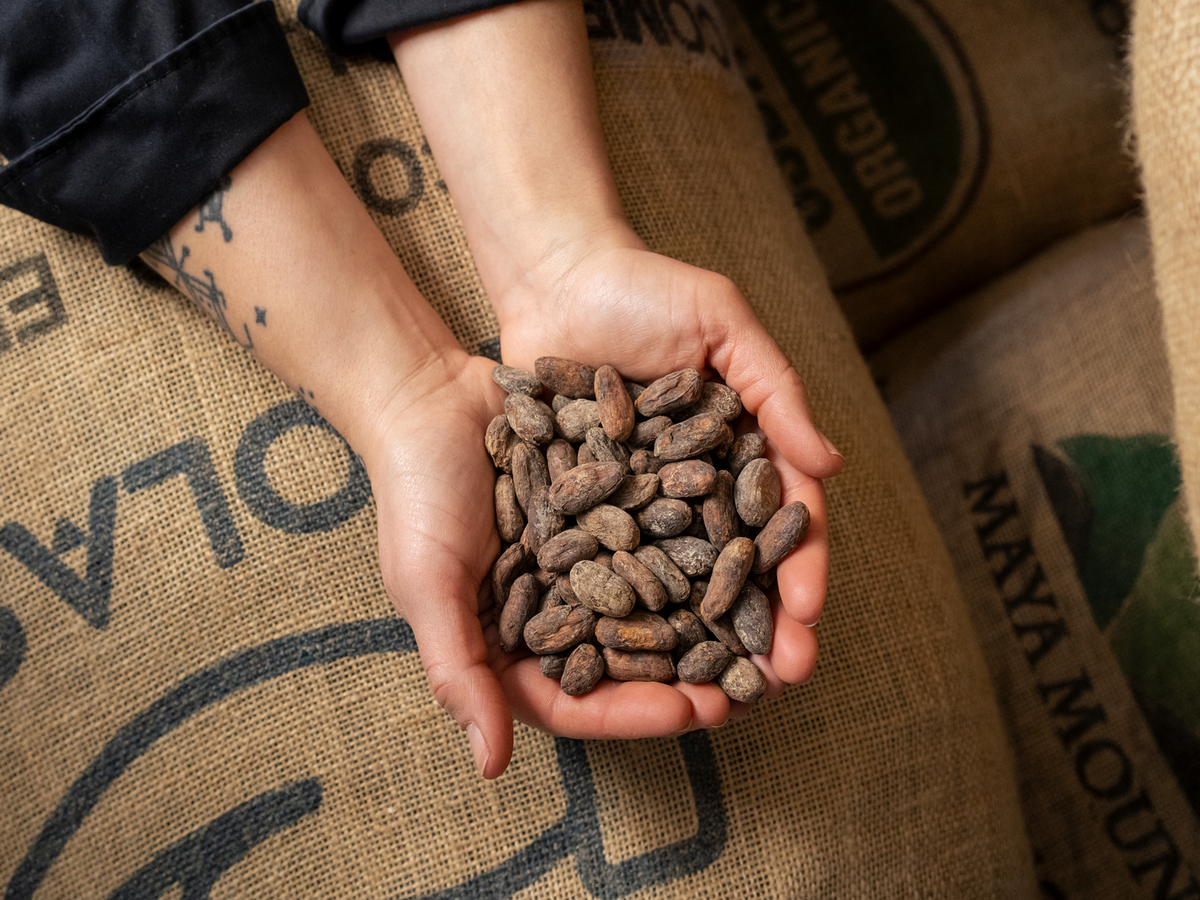
Öko Caribe buys the cacao fresh, still coated in its white pulp, and ferments it in a single place. No more than six hours after the harvest, it must have reached the centre in Pimentel. It ferments for five to six days in wooden boxes set out in a cascade, where the team monitors the temperature. It dries for a week to ten days in a solar tunnel. Between box and sack, it loses sixty to seventy per cent of its weight. The beans are sorted by hand and packed into seventy-kilo sacks.
In the Dominican trade, unfermented cacao that has simply been dried is called “Sánchez”, after the port it used to ship from; fermented cacao is called “Hispaniola”, like the island. This one is a Hispaniola. The harvest runs from March to August.
From Potosí to Pimentel
Gualberto Acebey comes from the department of Potosí, in Bolivia: a small Andean valley more than three thousand metres up. At eighteen, he left to study in Germany. His university had greenhouses that recreated the Amazonian climate: it was in Germany, he says, that he discovered cacao. After his studies, he joined the German government's development agency. He spent six years working on a project with El Ceibo, a Bolivian cooperative he describes as the world's first organic cacao cooperative. Then the agency offered him similar work in the Dominican Republic, with CONACADO, a federation of cacao cooperatives that then counted more than eight thousand smallholders. There, Adriano Rodríguez was his partner.
Around 2000, Gualberto says, Dominican cacao was seen as lower-quality cacao: it was hardly fermented, beans of every kind were mixed together, and it sold at a discount. At CONACADO, they began collecting the cacao fresh to process it in a single centre, “like a revolution in the country”. With the support of CIRAD, the French agricultural research organisation for development, Adriano and Gualberto ran nearly three years of trials. Well-built wooden boxes won out. For drying, Gualberto says, they adapted the coffee sector's solar tunnel to cacao. In 2006, after seven years at CONACADO, they founded Öko Caribe. “Öko” is German for “eco”.
Today, Gualberto and Adriano know each of the growers personally. They lend them money for cacao-related costs and for family emergencies. Öko Caribe trains them in pruning and replanting, and helps repair the roads. “What we lack in volume,” Gualberto said in 2017, “we make up for in quality.”

Our ingredients
One bean,
three ingredients
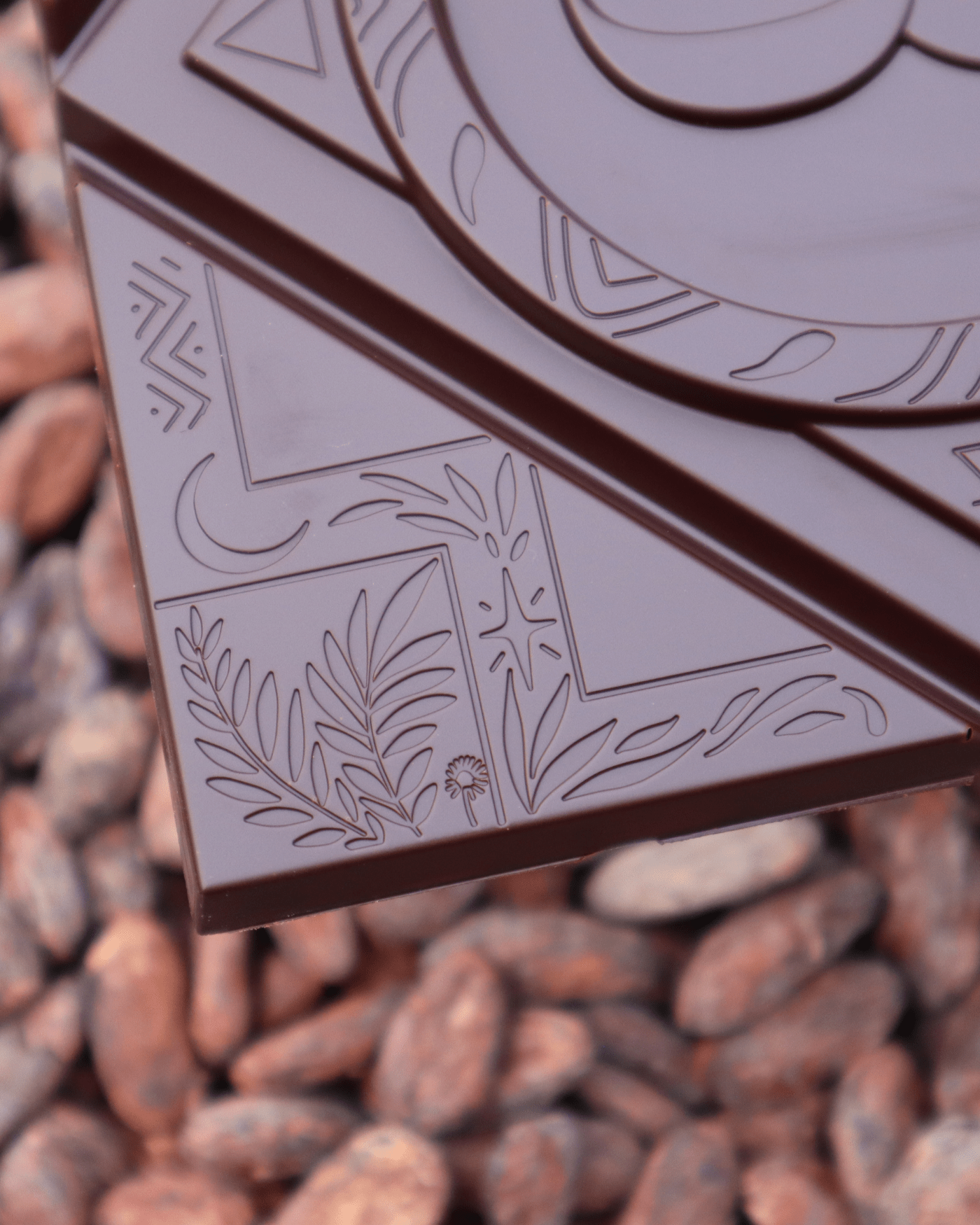
From these beans comes cacao mass: this is our ceremonial cacao, one hundred per cent cacao, lightly roasted and simply tempered into chunks. Pressed, cacao mass yields butter and a press cake which, once ground, becomes powder. Our butter, which is not deodorised, and our powder are made from the same producer's beans. Crafting Markets, in Amsterdam, connects us with Öko Caribe.
For five years, our ceremonial cacao came from another project. In 2026, we tasted Öko Caribe's cacao mass, which Crafting Markets offered us, and we chose it.